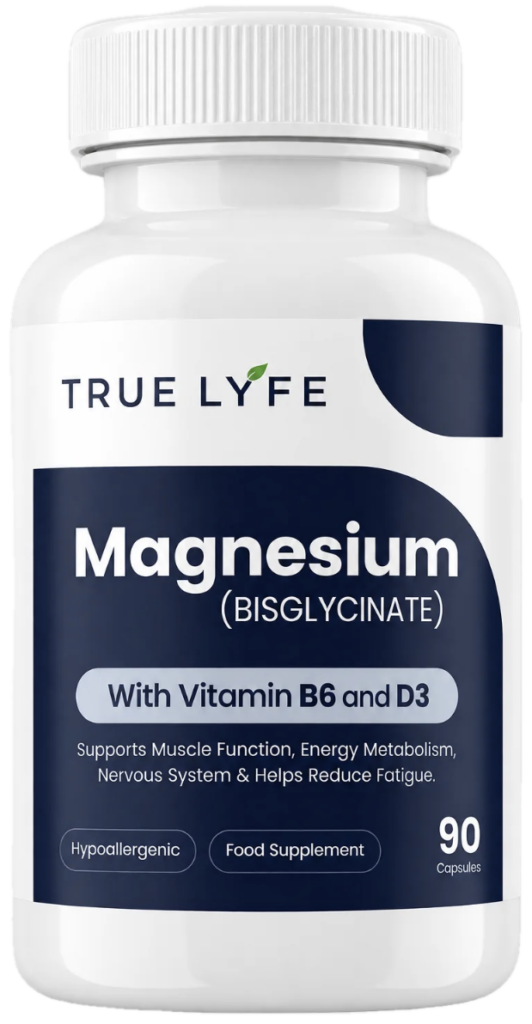
Magnesium Bisglycinate + B6 + D3

Supports heart health, muscle contractions and metabolism. · 90 Capsules

No reviews yet — be the first
Magnesium contributes to normal energy-yielding metabolism.*
💪Magnesium contributes to normal muscle function.*
🧠Magnesium contributes to the normal functioning of the nervous system.*
*Authorised EU/UK nutrition claims per Regulation (EC) No 432/2012
£24.99
Buy Product →
Hypoallergenic Non-GMO Gluten Free Vegan Friendly

Authorised Health Claims · Regulation (EC) No 432/2012

What the Science
Allows Us to Say

Energy Metabolism

Magnesium contributes to normal energy-yielding metabolism.*

Supports ATP synthesis at the cellular level for sustained, natural energy.

💪

Muscle Function

Magnesium contributes to normal muscle function.*

Essential for the contraction and relaxation cycle of both skeletal and cardiac muscle.

🧠

Nervous System

Magnesium contributes to the normal functioning of the nervous system.*

Regulates neurotransmitter signalling and supports healthy neural response.

😴

Reduce Fatigue

Magnesium contributes to the reduction of tiredness and fatigue.*

Vitamin B6 also contributes to the reduction of tiredness and fatigue.*

🧬

Psychological Function

Magnesium contributes to normal psychological function.*

Supports mental clarity, emotional balance, and cognitive resilience.

🦴

Bone & Teeth

Magnesium contributes to the maintenance of normal bones.*

Vitamin D3 contributes to the maintenance of normal bones and teeth.*

Backed by Published Studies

Backed by
Published Studies

Our formulation is informed by peer-reviewed clinical research published in indexed journals.

Sleep QualityStress & MoodMuscle & ExerciseGeneral HealthD3 + Mg Synergy
Sleep Quality
Magnesium Supplementation and Insomnia in Elderly Adults
Abbasi B, Kimiagar M, Sadeghniiat K et al. · Journal of Research in Medical Sciences (2012)
Stress & Mood
The Effects of Magnesium Supplementation on Subjective Anxiety and Stress
Boyle NB, Lawton C, Dye L. · Nutrients (2017)
Muscle & Exercise
Can Magnesium Enhance Exercise Performance?
Zhang Y, Xun P, Wang R et al. · Nutrients (2017)

Knowledge Centre

Learn Before You
Supplement

🔬 What is Magnesium Bisglycinate? Understanding the form matters

Bisglycinate means magnesium is bonded (chelated) to two molecules of the amino acid glycine. This protective bond survives stomach acid, reaching the intestine intact for superior absorption versus oxide or citrate forms.

Magnesium oxide — the most common and cheapest form — has around 4% absorption. Bisglycinate consistently shows 40–60% absorption in comparative studies, meaning you need far less to achieve the same effect.

The glycine chelation prevents the osmotic laxative effect that causes digestive upset with high-dose oxide or citrate, making bisglycinate the preferred form for daily use.

🕐 When to Take It Timing optimises your results

Taking 1 capsule 1–2 hours before bed is supported by the evidence on sleep quality. Magnesium's calming effect on NMDA receptors helps ease the transition into deeper sleep stages.

The second capsule with your first meal takes advantage of food-enhanced absorption. Fat-soluble vitamin D3 in the formula also absorbs best alongside dietary fats.

If training hard, timing one capsule within 90 minutes of finishing exercise can support muscle recovery, as magnesium is rapidly lost through sweat and urinary excretion during intense activity.

Research shows the most significant benefits come from consistent daily supplementation over 4–12 weeks. Missing one dose occasionally matters far less than stopping entirely.

👥 Who Benefits Most? Populations most likely to be deficient

Exercise dramatically increases magnesium requirements. Heavy trainers, endurance athletes, and people in physical jobs are at high risk of depletion through sweat loss.

Cortisol (the stress hormone) directly increases urinary magnesium excretion. People managing high-stress work or life demands cycle through magnesium significantly faster.

Low magnesium status and poor sleep reinforce each other in a feedback loop. Bisglycinate breaks that cycle with glycine's additional calming neurotransmitter effects.

Magnesium is highest in dark leafy greens, nuts, seeds, and whole grains. Western diets processed of these foods leave a significant gap that supplementation helps fill.

🧩 Nutrient Interactions What pairs well and what to watch

Magnesium is required to convert vitamin D into its active form. Without adequate magnesium, supplemental D3 may remain inactive. Our formula pairs them deliberately.

B6 (as P-5-P) facilitates magnesium transport into cells. Research shows B6 co-supplementation increases intracellular magnesium levels more than magnesium alone.

Calcium and magnesium compete for the same intestinal transporters. If you also take calcium supplements, separate them by at least 2 hours to avoid absorption interference.

Always consult your GP or pharmacist if you take diuretics, antibiotics, or medications for heart conditions before starting supplementation. Food supplements are not a substitute for medical treatment.

Customer Reviews

Real People.
Real Results.

0.0
0 verified reviews

No reviews yet for this product — be the first to share your experience.

Start Today

Feel the Difference
Naturally

Head to Amazon to place your order — fast, trusted delivery and full buyer protection.

Buy Product — £24.99

Peer-Reviewed Research

The Science Behind the Formula

5 indexed studies supporting the ingredients and dosages in this formula.

Sleep Quality

Magnesium Supplementation and Insomnia in Elderly Adults

Abbasi B, Kimiagar M, Sadeghniiat K et al.

Journal
Journal of Research in Medical Sciences
Year
2012
PMID
23853635

A double-blind, placebo-controlled trial found that magnesium supplementation significantly improved subjective sleep quality, sleep efficiency, and early morning awakening measures, while reducing insomnia severity.

Key Finding

Significant improvements in ISI score, sleep efficiency, and serum melatonin after 8 weeks.

These studies are referenced for educational purposes. This product is a food supplement and is not intended to diagnose, treat, cure, or prevent any disease. Individual results may vary. Consult a healthcare professional for personalised advice.

Stress & Mood

The Effects of Magnesium Supplementation on Subjective Anxiety and Stress

Boyle NB, Lawton C, Dye L.

Journal
Nutrients
Year
2017
PMID
28445426

Systematic review of 18 studies indicating that magnesium supplementation may have a beneficial effect on subjective measures of anxiety in vulnerable populations.

Key Finding

Mild to moderate anxiety measures were reduced across multiple controlled studies.

These studies are referenced for educational purposes. This product is a food supplement and is not intended to diagnose, treat, cure, or prevent any disease. Individual results may vary. Consult a healthcare professional for personalised advice.

Muscle & Exercise

Can Magnesium Enhance Exercise Performance?

Zhang Y, Xun P, Wang R et al.

Journal
Nutrients
Year
2017
PMID
28846654

Review of 14 randomised controlled trials concluding that magnesium supplementation improves exercise performance with particular benefit in athletes, elderly patients, and people with deficiency.

Key Finding

Statistically significant improvements in muscle strength and endurance outcomes.

These studies are referenced for educational purposes. This product is a food supplement and is not intended to diagnose, treat, cure, or prevent any disease. Individual results may vary. Consult a healthcare professional for personalised advice.

General Health

Subclinical Magnesium Deficiency: A Principal Driver of Cardiovascular Disease

DiNicolantonio JJ, O'Keefe JH, Wilson W.

Journal
Open Heart (BMJ)
Year
2018
PMID
29387426

Review suggesting that subclinical magnesium deficiency is extremely common in developed countries and linked to multiple chronic disease conditions, underlining the importance of adequate supplementation.

Key Finding

Up to 50% of adults in developed countries may have inadequate magnesium intake.

These studies are referenced for educational purposes. This product is a food supplement and is not intended to diagnose, treat, cure, or prevent any disease. Individual results may vary. Consult a healthcare professional for personalised advice.

D3 + Mg Synergy

Vitamin D and Magnesium: Synergistic Nutrient Interactions

Reddy P, Edwards LR.

Journal
Journal of the American Osteopathic Association
Year
2019
PMID
31344773

Research demonstrating that magnesium is required to activate vitamin D3, and that the two nutrients have a bidirectional relationship in supporting immune function and calcium metabolism.

Key Finding

Mg-deficient individuals cannot properly activate vitamin D regardless of supplementation.

These studies are referenced for educational purposes. This product is a food supplement and is not intended to diagnose, treat, cure, or prevent any disease. Individual results may vary. Consult a healthcare professional for personalised advice.

Share Your Experience

Write a Review

By submitting a review you confirm this reflects your genuine experience of the product.