
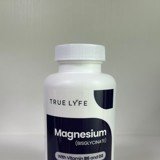
Magnesium and Sleep: What the Research Actually Shows
Struggling to switch off at night is one of the most common complaints in the UK, and magnesium has become one of the most talked-about supplements for it. But what does the actual research say — particularly for the chelated (bisglycinate) form used in most modern magnesium supplements, including TrueLyfe?
Why magnesium is linked to sleep
Magnesium is involved in several pathways relevant to winding down: it helps regulate GABA, the brain’s main calming neurotransmitter, and it moderates NMDA receptor activity, which is linked to nervous system excitability. It’s also a cofactor for enzymes involved in the body’s natural melatonin production. None of this makes magnesium a sedative — it’s a nutrient, not a sleeping pill — but it explains why researchers have investigated it for sleep support.
What the evidence actually shows
A 2025 randomised, double-blind, placebo-controlled trial gave 155 adults aged 18–65 with self-reported poor sleep either 250mg of elemental magnesium as bisglycinate or a placebo, daily, for four weeks. The magnesium group saw a significantly greater reduction in Insomnia Severity Index scores than the placebo group — though the researchers were upfront that the effect size was small (Cohen’s d = 0.2), meaning it’s a modest, real benefit rather than a dramatic one.
A separate randomised crossover trial found that magnesium supplementation (at a higher 1g/day dose, over two weeks) improved sleep quality, mood, and daytime activity compared with placebo in adults with non-clinical insomnia symptoms — supportive, though it used a different dose and didn’t specify the bisglycinate form.
It’s worth being just as upfront about the mixed results: a trial in women with polycystic ovary syndrome found magnesium oxide supplementation had no significant effect on sleep quality. Oxide is a poorly-absorbed form of magnesium (see our Science section for the absorption research), and PCOS is a specific population, so this doesn’t cancel out the positive findings above — but it’s a reminder that magnesium isn’t a guaranteed fix for everyone, and form matters.
Why form matters
Older research comparing magnesium salts found citrate and bisglycinate forms are generally better absorbed than oxide, and bisglycinate in particular tends to be gentler on the stomach at effective doses, since it doesn’t rely on the same osmotic mechanism that causes the laxative effect associated with high-dose citrate or oxide. That’s a large part of why bisglycinate has become the preferred form in recent sleep-focused research.
The practical takeaway
Magnesium bisglycinate is not a replacement for good sleep hygiene, and it isn’t a treatment for clinical insomnia or sleep disorders — if sleep problems are persistent or severe, that’s worth raising with a GP. But as part of a consistent daily routine, alongside food, the current evidence supports a modest, real benefit for people with everyday poor sleep.
Sources
- Magnesium Bisglycinate Supplementation in Healthy Adults Reporting Poor Sleep: A Randomized, Placebo-Controlled Trial. Nat Sci Sleep. 2025. PubMed
- Effectiveness of Magnesium Supplementation on Sleep Quality and Mood for Adults with Poor Sleep Quality: A Randomized Double-Blind Placebo-Controlled Crossover Pilot Trial. Medical Research Archives. Read study
- Effect of magnesium supplementation on sleep quality in women with polycystic ovary syndrome: A randomized, placebo-controlled clinical trial. PMC
- Lindberg JS, Zobitz MM, Poindexter JR, Pak CY. Magnesium bioavailability from magnesium citrate and magnesium oxide. J Am Coll Nutr. 1990;9(1):48–55. PubMed
This article is for general information only and is not medical advice. If you have ongoing sleep difficulties, speak to your GP.